

Today’s post in inspired by this LinkedIn post. There is a specific, quiet moment many women in leadership know by heart.
You walk into a room carrying full accountability for the outcomes – the Profit & Loss, the product roadmap, the high-stakes execution. Yet, despite the title and the track record, someone in that room instinctively assumes you’re there to support the strategy, not to set it.
It’s rarely a loud confrontation. It’s rarely dramatic. But it is incredibly revealing.
Over the years, I’ve realized that when you encounter these moments, it isn’t a reflection of your worth. It’s a diagnostic tool for the ecosystem.
The High Cost of “Shrinking to Fit”
Early in our careers, many of us are taught a subtle, exhausting trade-off. We are coached to calibrate ourselves to the comfort level of the room:
- Be strong, but don’t be intimidating.
- Be clear, but avoid being too direct.
- Be ambitious, but keep it palatable.
We internalize the myth that if we just find the right volume, we’ll finally belong. But real leadership isn’t a game of social acoustics. Strong networks and true influence aren’t built by shrinking to fit the existing mold; they are built through clarity and integrity.
The right allies don’t ask you to dilute your presence. They expand the room to accommodate it.
Shifting the Lens: From Individuals to Environments
We often frame equity through the lens of individual friction. The biased comment or the overlooked promotion. But leadership operates at the level of the ecosystem.
When a capable leader can’t find footing or allies, the question shouldn’t be: “What is she doing wrong?” The question must be: “What kind of environment are we sustaining?”
A healthy ecosystem is defined by three things:
- Competence over Conformity: Rewarding results without demanding a specific vibe.
- Amplification without Appropriation: Ensuring ideas are credited to their source.
- Sponsorship without Control: Opening doors without requiring a debt in return.
Privilege as Signal-Setting
There is a profound responsibility that comes with influence. When leaders share their stories, especially the uncomfortable ones, it does more than just vent a grievance. It recalibrates the room.
It forces a board member to pause before defaulting to “pattern recognition” (which is often just coded bias). It validates the junior leader who wondered if they imagined the slight.
When used intentionally, privilege becomes sponsorship. It moves past performative advocacy and into deliberate signal-setting. As leaders, we aren’t just managing teams; we are architects of the norms that will outlast us.
The Responsibility to Build Forward
In my own leadership, my goal isn’t to lower the standards, it’s to remove the unnecessary friction. I want to lead in a way that makes the path clearer for the next generation, not by shrinking the room, but by making it bigger.
Allies exist, but they are rarely accidental. They are built through consistency and conviction. And once we find them, our primary responsibility is to become them.
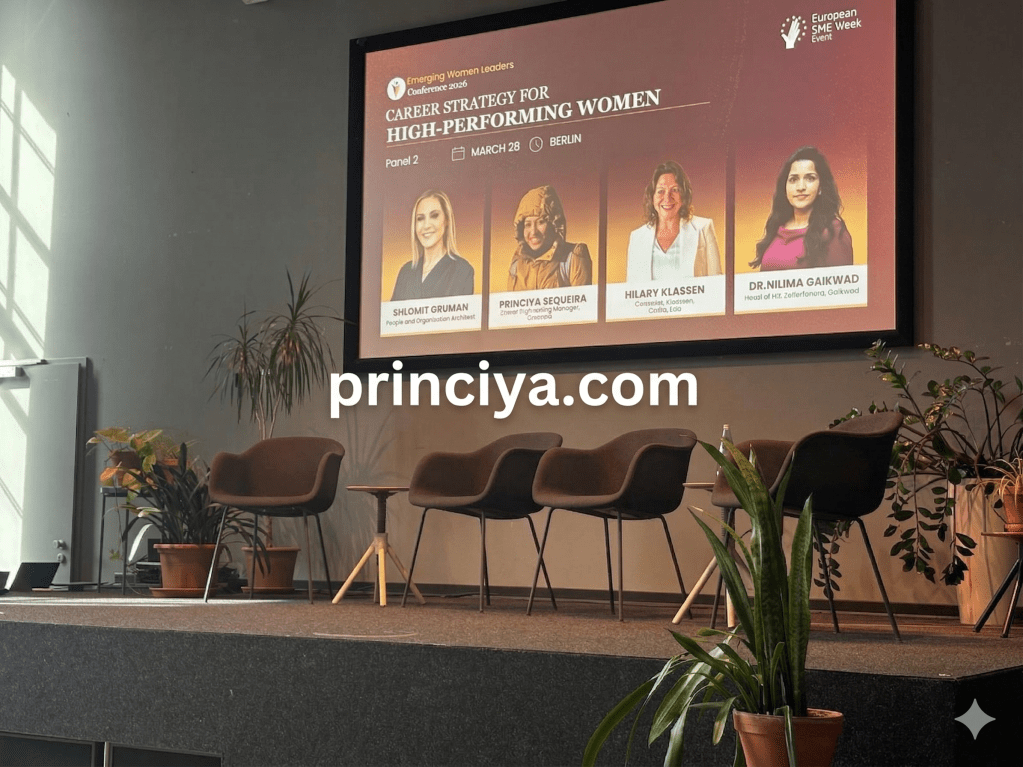



 Princiya Sequeira
Leave a comment